What Is AIDC, and How Does RFID Fit into Connected Operations?
A practical guide to AIDC, where RFID fits, and how identification data connects with Industrial IoT and business systems.

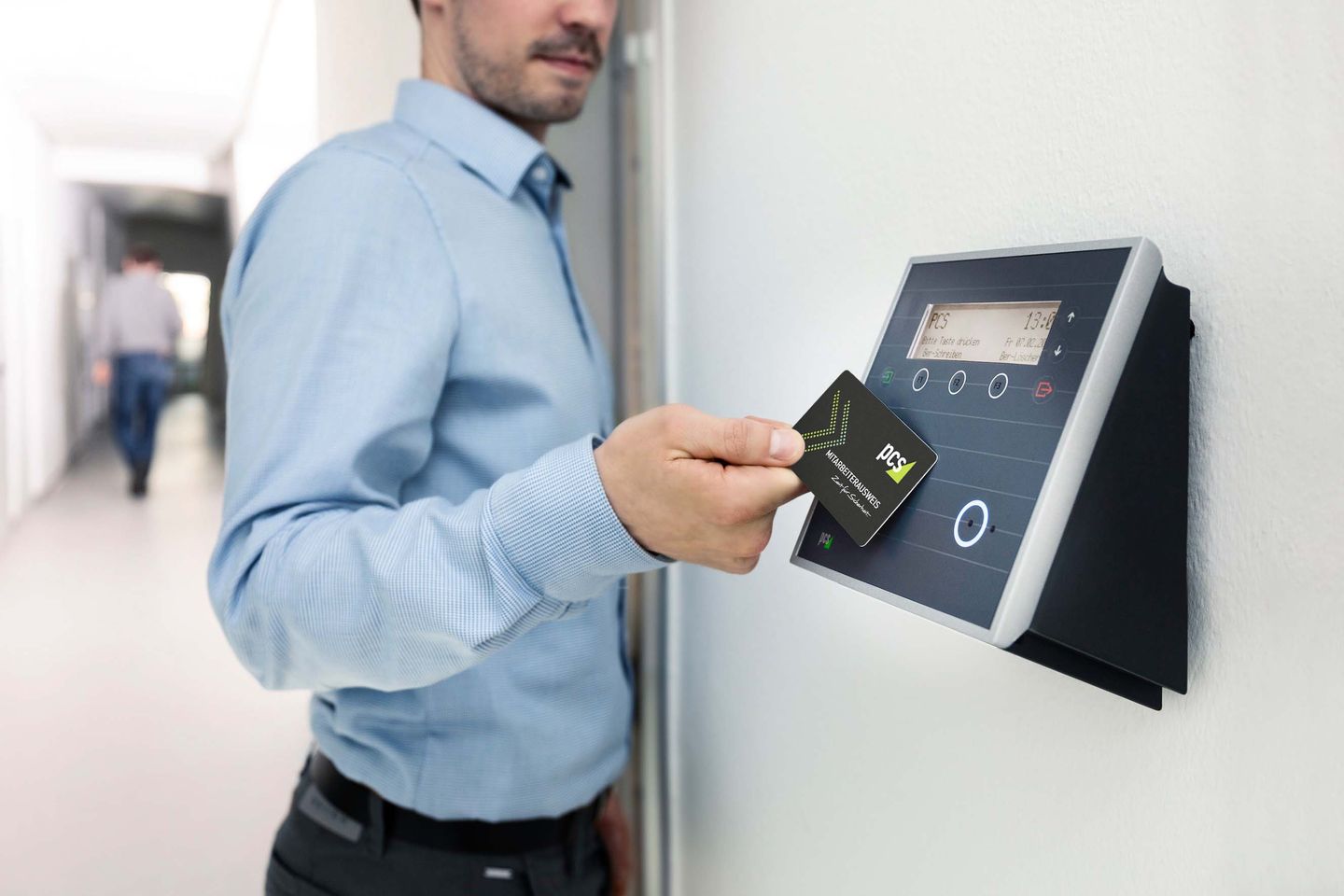
AIDC stands for Automatic Identification and Data Capture: the set of technologies that let a system identify a physical thing and record something about it without a person typing anything. It is an umbrella term rather than a product. Barcodes, QR codes, RFID, sensors, machine vision and biometrics all sit under it.
The distinction that matters operationally is not which technology is newest. It is that AIDC replaces a human transcription step with a machine-read one, and every question worth asking follows from that.
What AIDC actually covers
Four families account for most industrial deployments, and they are chosen by what the environment allows rather than by preference.
Barcodes and QR codes
Cheap, printable, and understood everywhere. They require line of sight and one scan per item, which makes them well suited to controlled points such as a picking station, a checkout or a document handoff, and poorly suited to reading a loaded pallet as it moves.
RFID
Radio frequency identification reads tags without line of sight, and reads many of them at once. That is the capability that separates it from barcode: a portal can capture a full pallet as it crosses a dock door rather than requiring each carton to be presented to a scanner.
Sensors
Temperature, humidity, shock, position, vibration. Sensors describe condition and state rather than identity, which makes them the complement to an identifier rather than a substitute for one. Knowing a shipment is this shipment is identification; knowing it stayed within range the whole way is sensing.
Machine vision
Cameras and image processing, used where the thing being identified has no tag and no label: verifying an assembly is complete, reading a damaged code, counting items in a bin.
Where RFID fits
RFID earns its place in three specific conditions, and struggles outside them.
- Bulk reads. When many items pass a point together and scanning each one is not practical.
- No line of sight. When the identifier is inside a carton, under wrap, or on the far side of a load.
- Movement without a stop. When making the item pause to be read would cost more than the visibility is worth.
Against that, RFID is affected by the physics of the environment. Metal reflects, liquid absorbs, and a tag that reads perfectly on a cardboard box may not read at all on a drum of solvent. This is why a serious RFID project starts with tag testing on the real material and a site survey of the real environment, not with a hardware order.
RFID and barcode are not competitors
Most working estates use both. Barcode holds the controlled, single-item points where it is cheaper and entirely adequate; RFID holds the movement points where per-item scanning would be the bottleneck. Choosing one technology for a whole site is usually a decision made for procurement reasons rather than operational ones.
From a read to a business event
This is the step most often underestimated. A reader does not produce inventory transactions. It produces observations (this tag, this antenna, this millisecond) and it produces a great many of them, including duplicates of the same tag sitting within range, and tags belonging to stock that merely happened to be nearby.
Between the device and the enterprise system there has to be a layer that decides what the reads mean:
- Deduplication. Forty reads of one tag crossing a portal are one movement, not forty.
- Zone logic. A tag read by the inbound antenna and then the outbound one has moved; a tag read repeatedly by one antenna has not.
- Business rules. Whether a movement is a valid receipt depends on the purchase order, the location and the expected contents, none of which the reader knows.
- Exception handling. A pallet expected to carry forty cartons that reads thirty-eight is the case the system exists to catch, and it must go to a person rather than silently into the ledger.
Sending raw reads straight into an ERP skips all four, and the usual result is a system that is technically integrated and operationally untrusted.
How identification connects with Industrial IoT
AIDC answers what and where. Industrial IoT answers how it is behaving. They are most useful joined: an asset identified by its tag, described by its sensors, and placed on a timeline.
A cold-chain shipment is the clearest example. RFID establishes which consignment crossed which checkpoint and when. Temperature sensors establish whether it stayed in range between those checkpoints. Either alone leaves the question half answered: you know the goods arrived, or you know something was too warm, but not which goods.
Where a platform layer fits
A single reader at a single door does not need a platform. The need appears with scale: several sites, several vendors, several downstream systems, each with its own configuration tool, event format and failure mode.
Edge360 is built for that layer, managing compatible RFID and IoT devices across vendors and sites, normalizing their events into one model, and delivering validated events to the ERP, WMS or MES that needs them. The value is not the reading; it is that the estate can be operated, monitored and integrated as one thing rather than as a dozen.
Questions worth answering before you buy anything
- Which physical events actually change a business record? Everything else is data you will store and never use.
- What is the material, and what is around it? This decides whether RFID is viable before cost does.
- Which system owns the resulting state, and what happens when two disagree?
- How quickly must the record reflect the movement: seconds, or by end of shift? The honest answer often removes the need for the more expensive design.
- What does the process do when a read is missing or ambiguous? A design without an exception path will produce one anyway, informally and invisibly.
A practical next step
Pick one workflow with a known visibility gap, and prove it end to end: tag testing on the real material, a read zone in the real environment, events into the real system, and the exception cases run deliberately rather than discovered in production. A pilot that survives its own edge cases is worth more than a site-wide rollout designed on paper.